In Provençal, it's called rafrège cuou, literally "cools the backside." The nickname says it all: the water at Sugiton can be cold, even bracing, in the height of August. The cause: freshwater springs that feed the calanque from deep within the limestone massif, sunlight that reaches the bottom of the coves for only part of the day, and above all an exposure to the Mistral, which quickly sweeps the warm surface water out to sea. The calanque de Sugiton, between Luminy and Morgiou, is one of the most accessible in Marseille and the most closely watched.
Booking required for the calanque de Sugiton (summer 2026)
To protect the calanque de Sugiton and the Pierres Tombées from the heavy erosion caused by overcrowding, the National Park limits the number of visitors from June to September.
Access requires a booking and presentation of a QR code.
Quota: 400 people/day.
See: How to access Sugiton with a booking?
⚠️ ACCESS & FIRE RISK INFO
Access to the Calanques is regulated by prefectural decree throughout the summer. Before you go, check if the area is open today (updated daily at 6:00 PM).
Check real-time access status
Sugiton: Access from Luminy
〽️
Difficulty:
Medium
⏱️
Walking time: 2h15 (1h down, 1h15 back up). Allow at least 1h15 for the climb back in summer.
🧗
Terrain: A wide, partly shaded DFCI fire track up to the pass, then a concrete descent to the booking checkpoint and a steep, rocky/stony trail marked with red dots.
💧
Water: A fountain at the Luminy trailhead. No water along the trail. Bring 2L per person.
👟
Equipment: Trail-running or hiking shoes.
How to reach the calanque de Sugiton from Luminy?
From Luminy: two paths, one starting point
The starting point is the Luminy campus, in Marseille's 9th arrondissement. A barrier marks the entrance to the National Park, a few metres past the fountain. Fill your water bottles here, it's the only water source. The track heading toward the pass is wide, shaded by a pine forest where some trees are over a century old. It climbs gently for twenty minutes up to the Col de Sugiton, at 215 m above sea level.From there, two options.
The first: a trail marked with three red dots, shorter but steep and littered with loose stones.
The second: the concrete DFCI fire track, built in the 1950s–60s for fire engines. It winds in tight switchbacks, longer but less technical. This is the track Henri-Georges Clouzot used as a backdrop for The Wages of Fear, starring Yves Montand. Whichever route you take down, the final stretch follows the marked trail. Allow at least 45 minutes for the climb back. In high summer, under full sun, an hour and fifteen is no exaggeration.
By bus: the most reliable option
In summer, the Luminy car park fills up early in the morning. The B1 line (formerly line 21) connects Place Castellane to the "Luminy – PN des Calanques" stop in 30 minutes, running every 6 to 8 minutes on weekdays. It's the simplest solution, sparing you both the parking problem and the wait in traffic, since buses on this line have a dedicated lane along much of the route. (You can also take line 24 from Sainte-Marguerite-Dromel.)The belvedere (La Tour d'Orient)
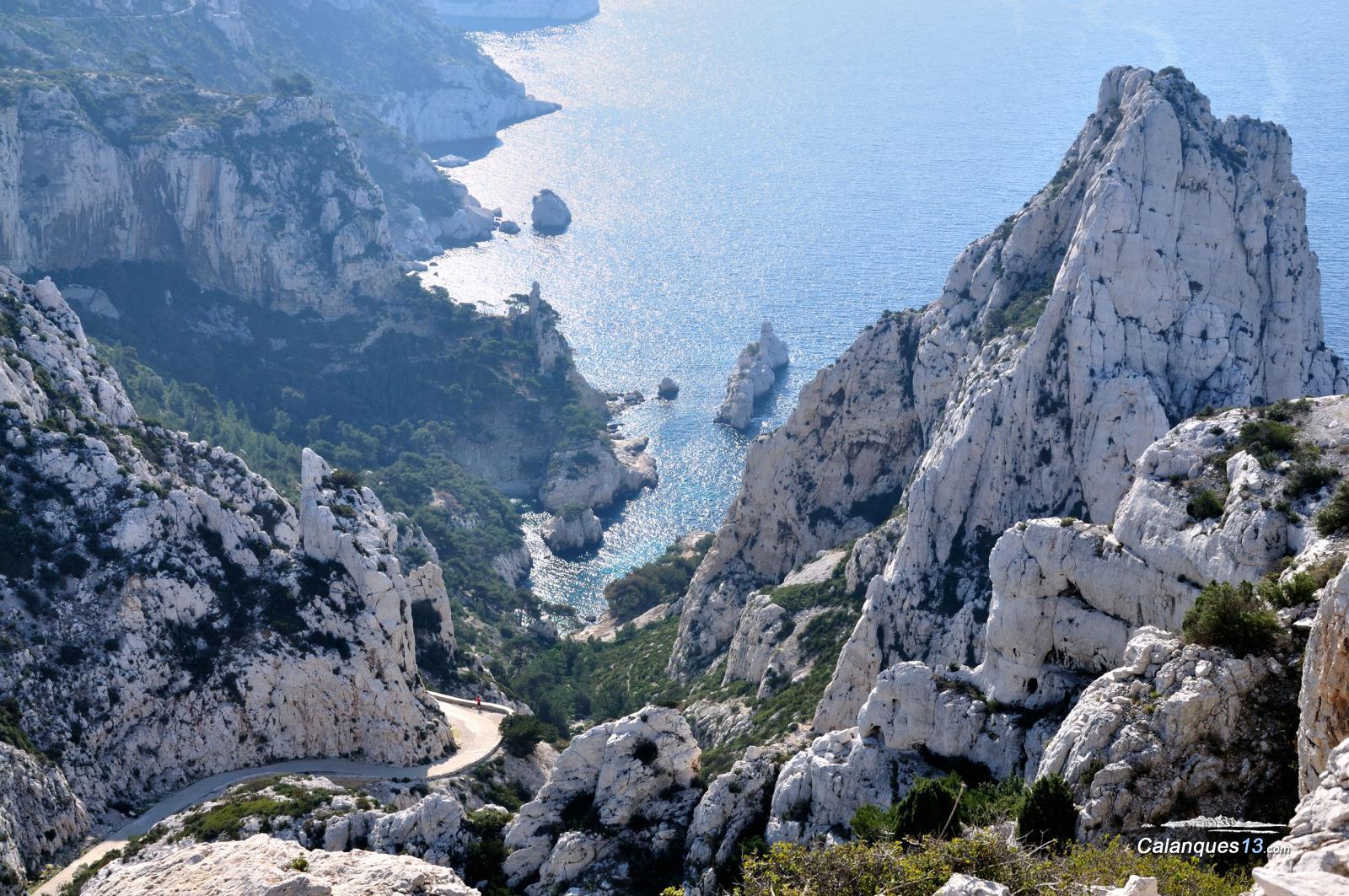
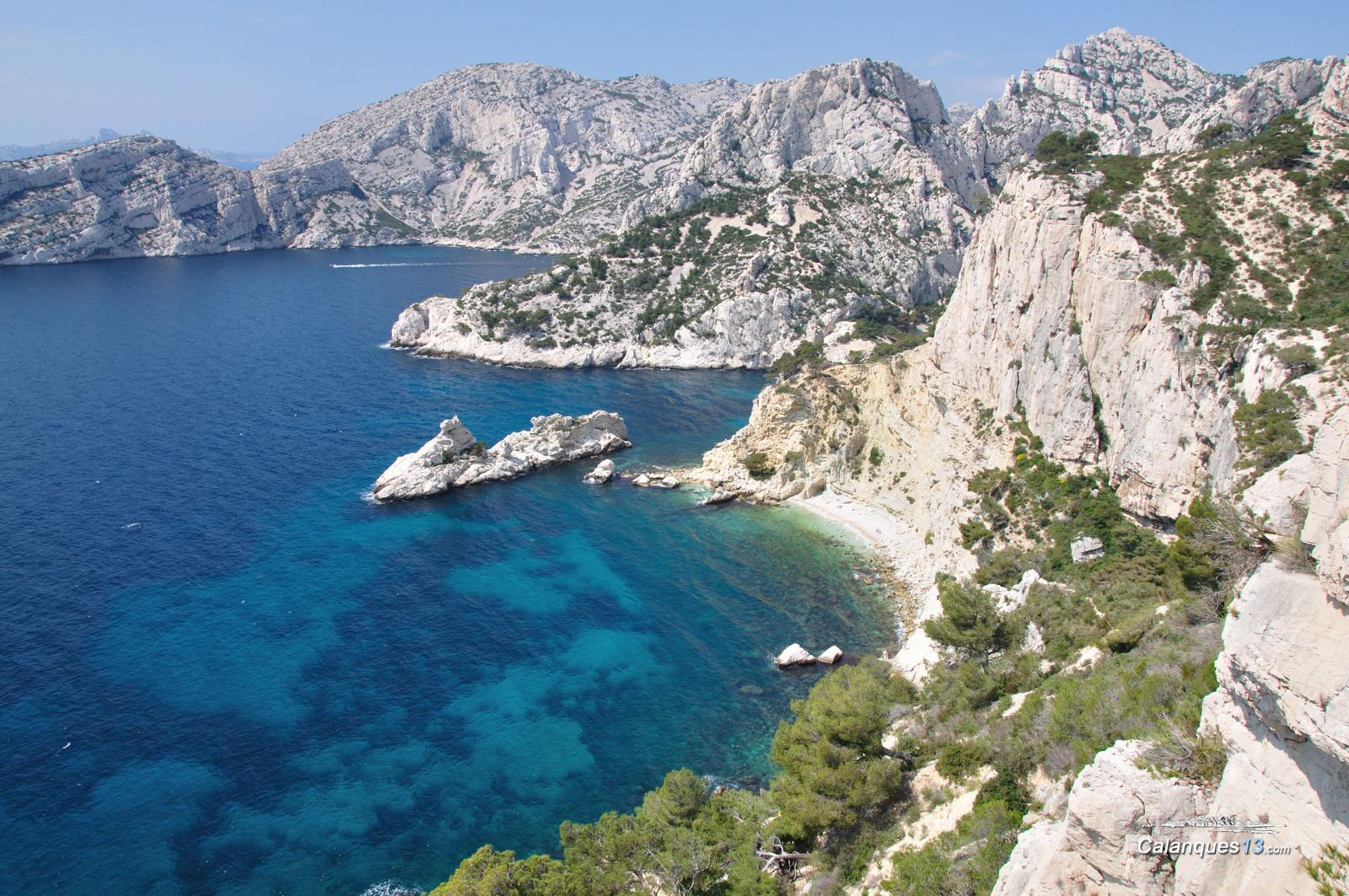
500 metres to the right of the pass, the belvedere (altitude 245 m) offers a panorama over the calanque de Morgiou, the Grande Candelle, Cap Canaille, and as far as the Embiez islands — the view is well worth the detour. The spot was once known as the "Tour d'Orient", a former military lookout chosen for its clear view out to sea.The detour takes half an hour round trip and clearly deserves a place in your walk. Thirty extra minutes, a panorama over four calanques. It's not a detour, it's half the walk.
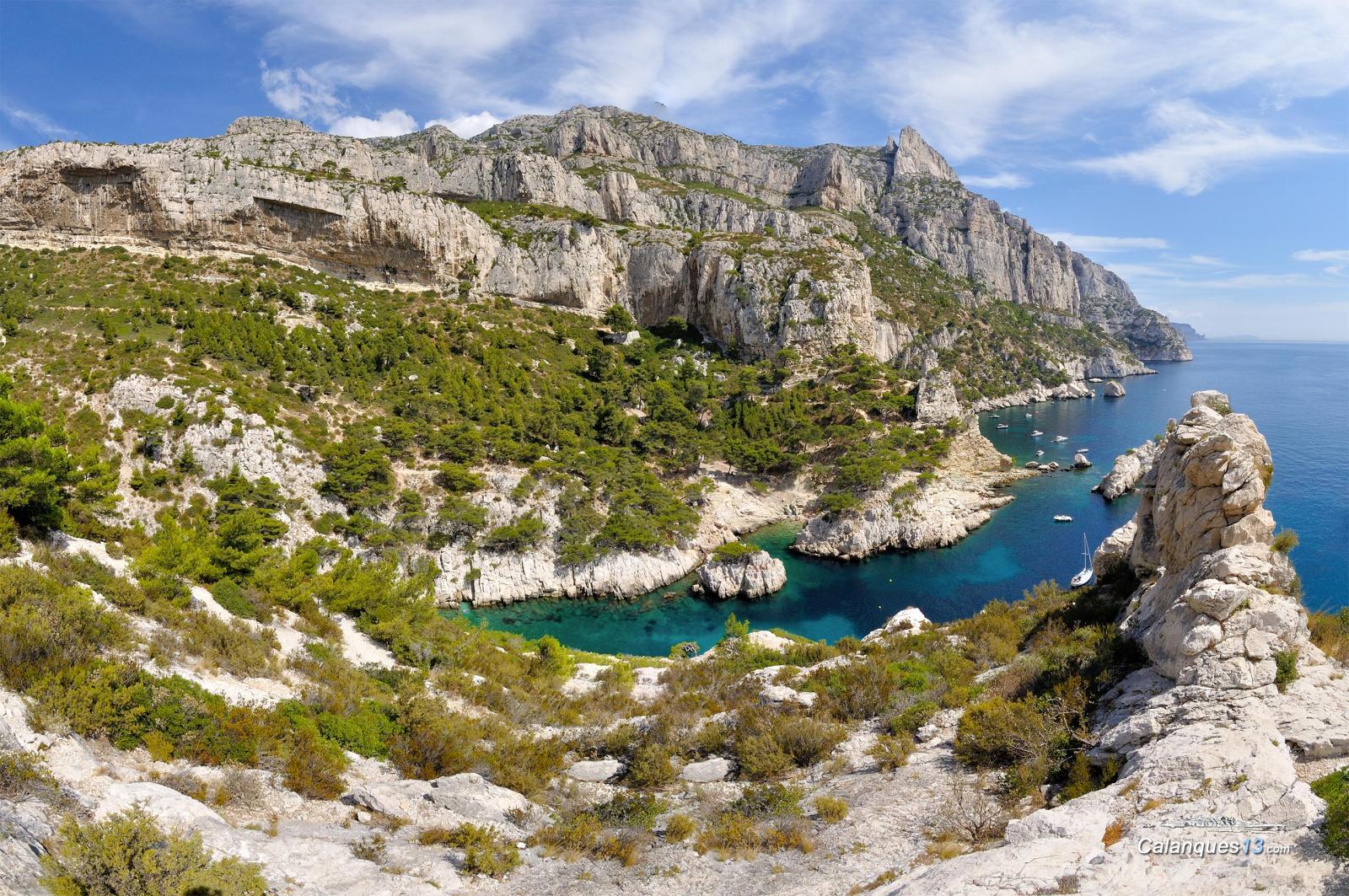
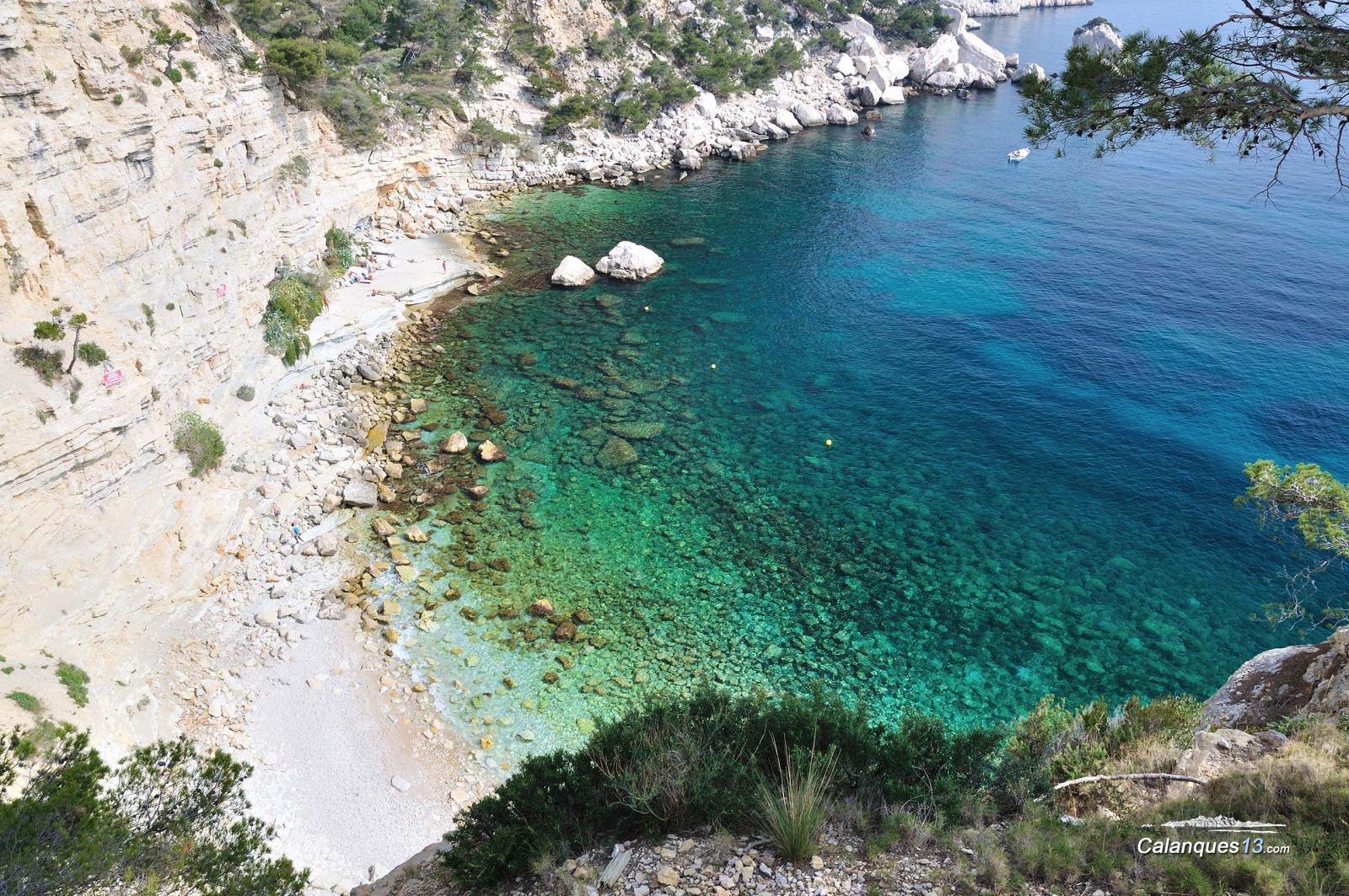
Swimming and beaches at Sugiton: the coves and Le Torpilleur
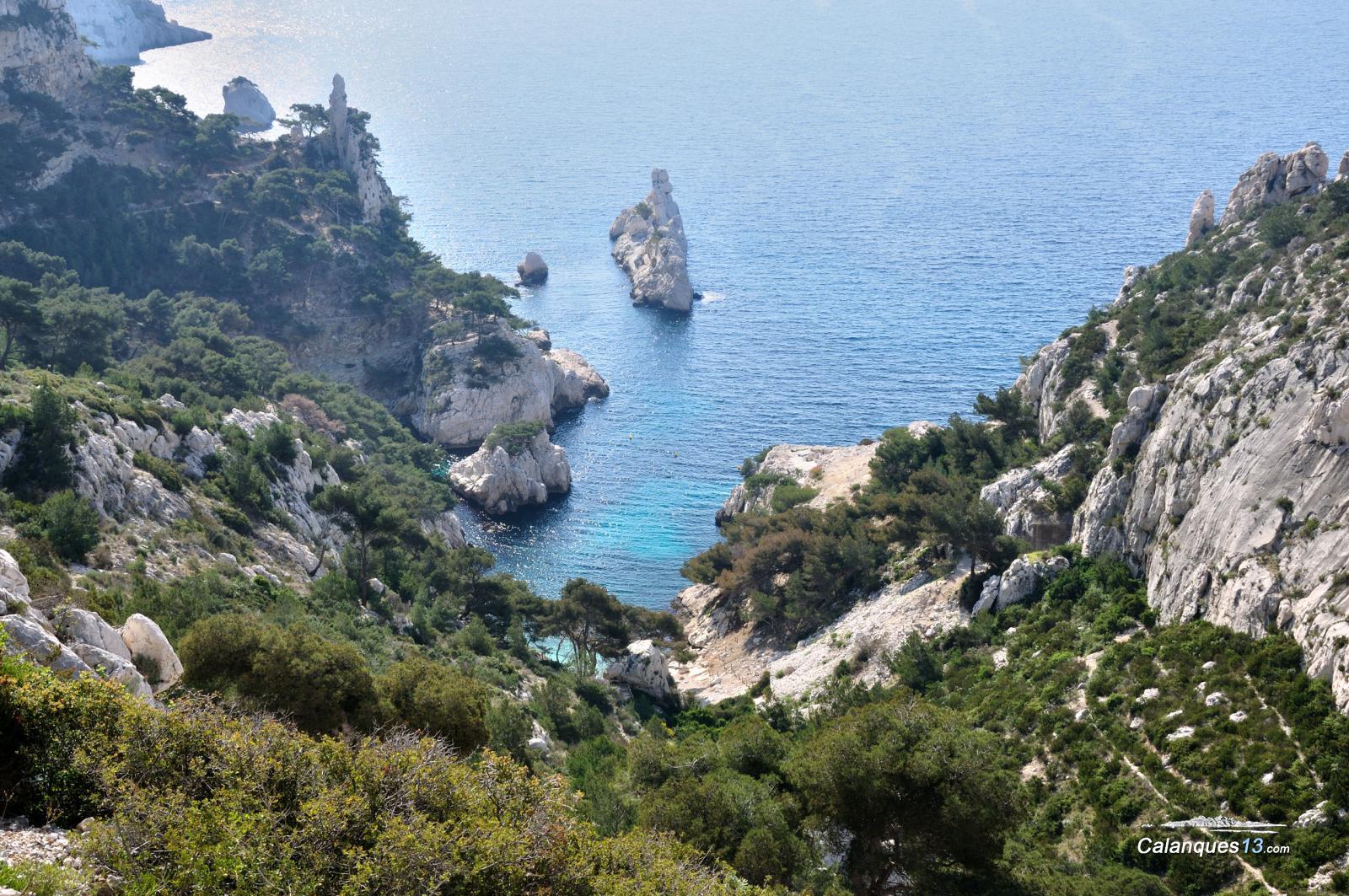
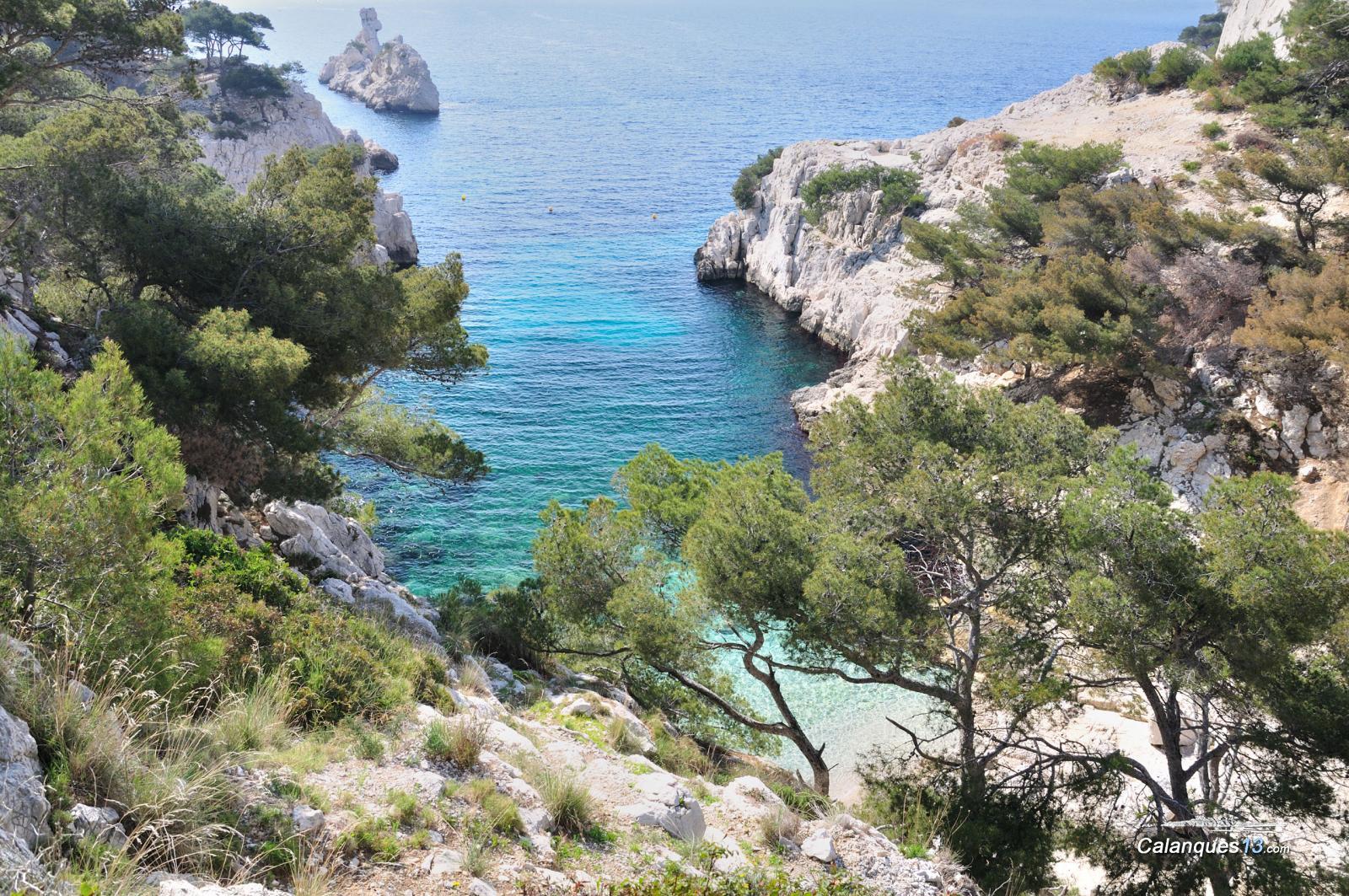
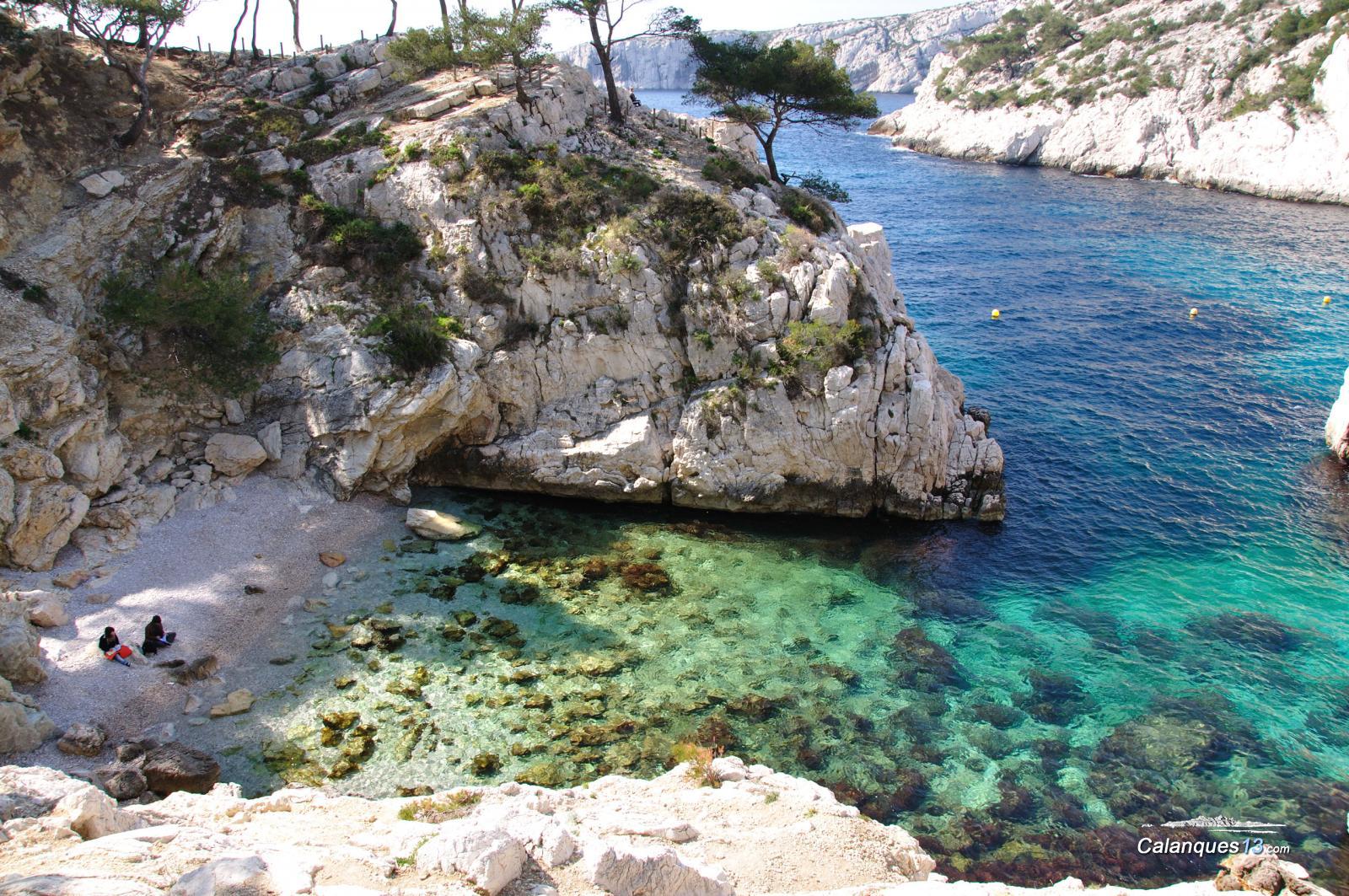
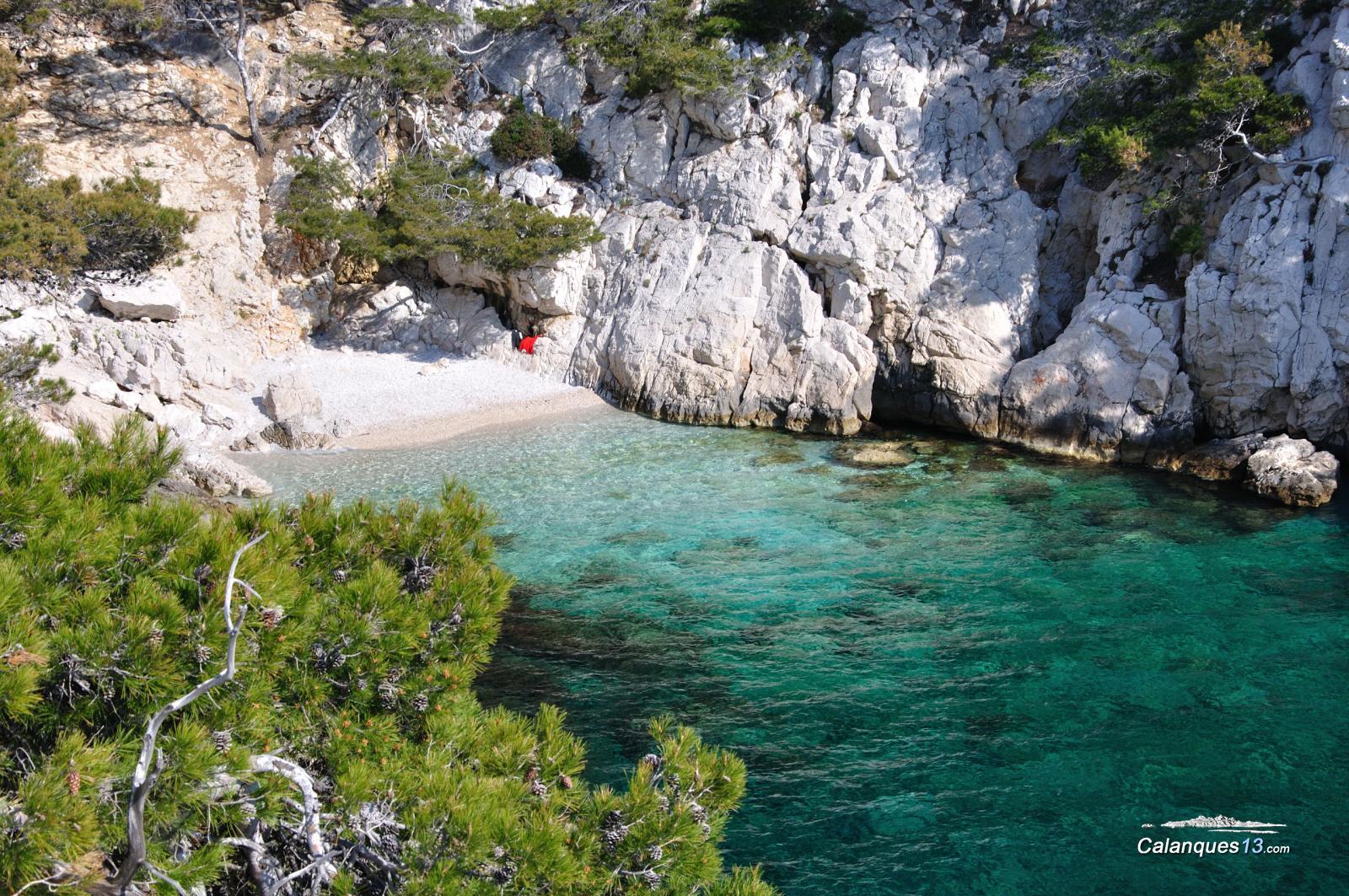
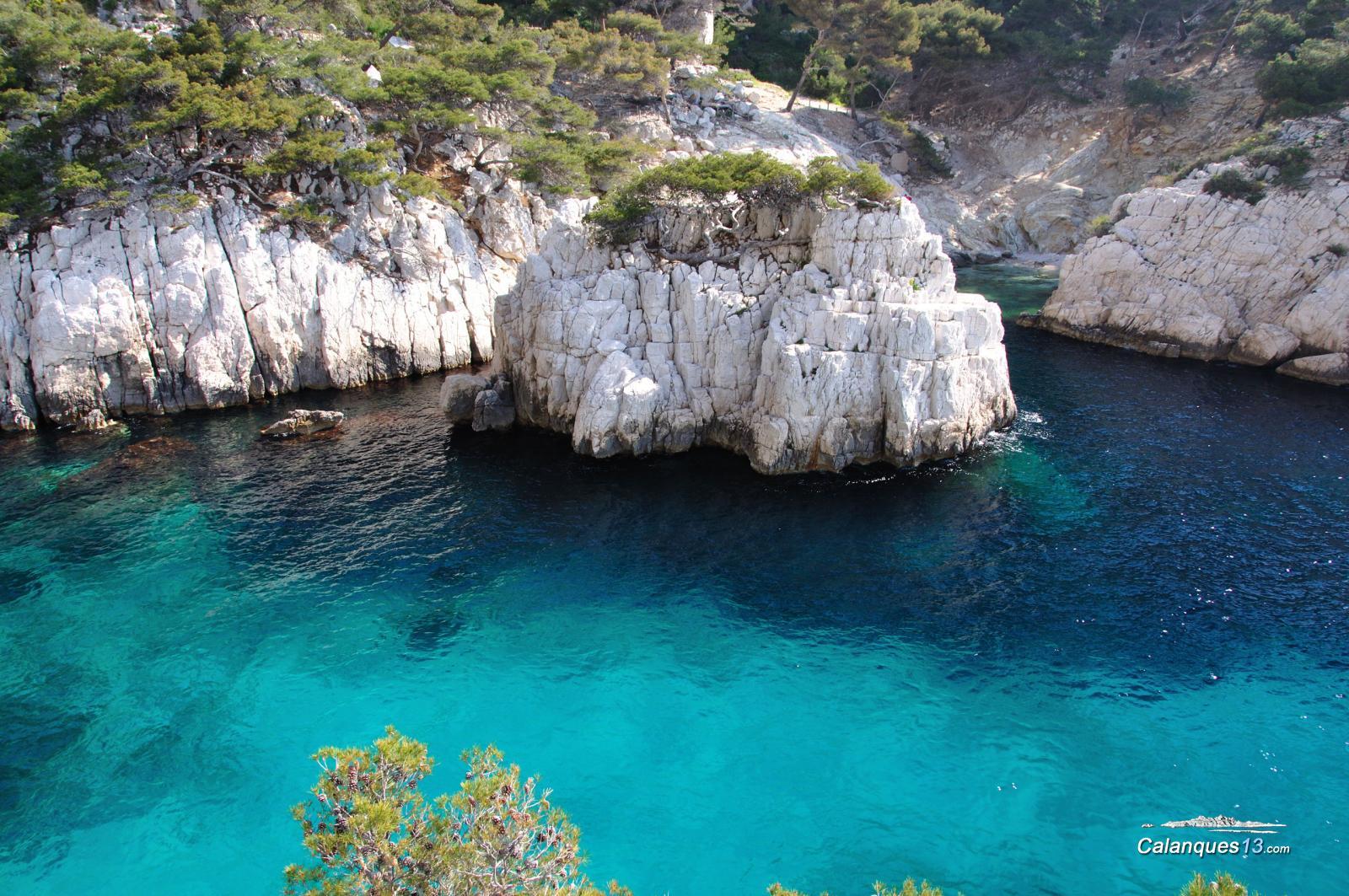
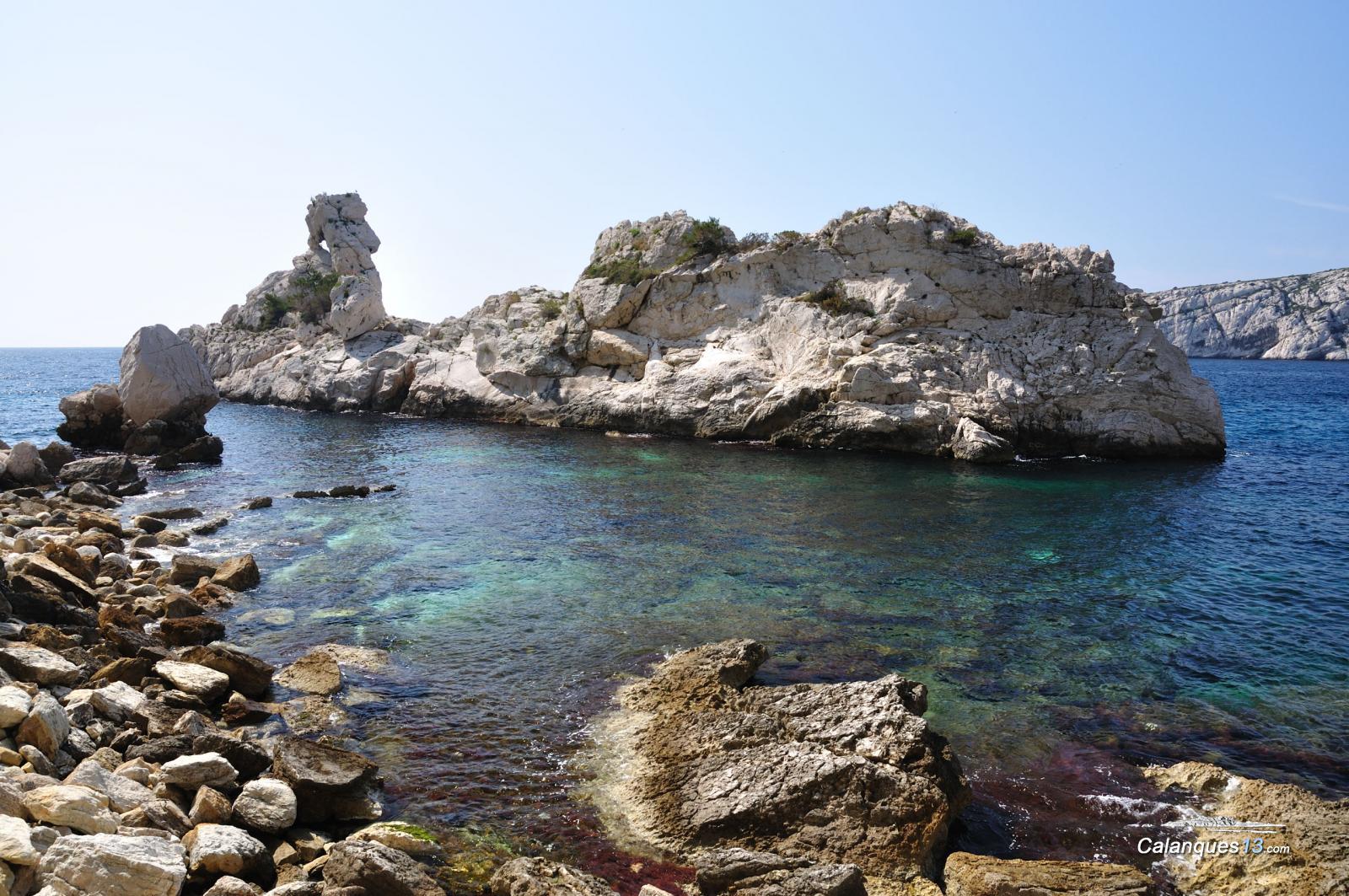
The calanque de Sugiton is made up of two narrow coves, each with a small pebble beach. The advantage of laying down your towel here is that the coves only get sun for part of the day, a real bonus in high summer, especially with the climb back ahead of you.Opposite, the islet known as Le Torpilleur, named for its resemblance to a warship, separates Sugiton from the calanque des Pierres Tombées. The channel between Le Torpilleur and the shore is shallow, unlike the seaward side, which some enjoy for a dive into the deep blue.
From the coves, the trails continue on one side toward Morgiou and on the other toward the calanque des Pierres Tombées. Further along lies the calanque de l'Œil de Verre, though it's better reached from the pass.
The calanque des Pierres Tombées
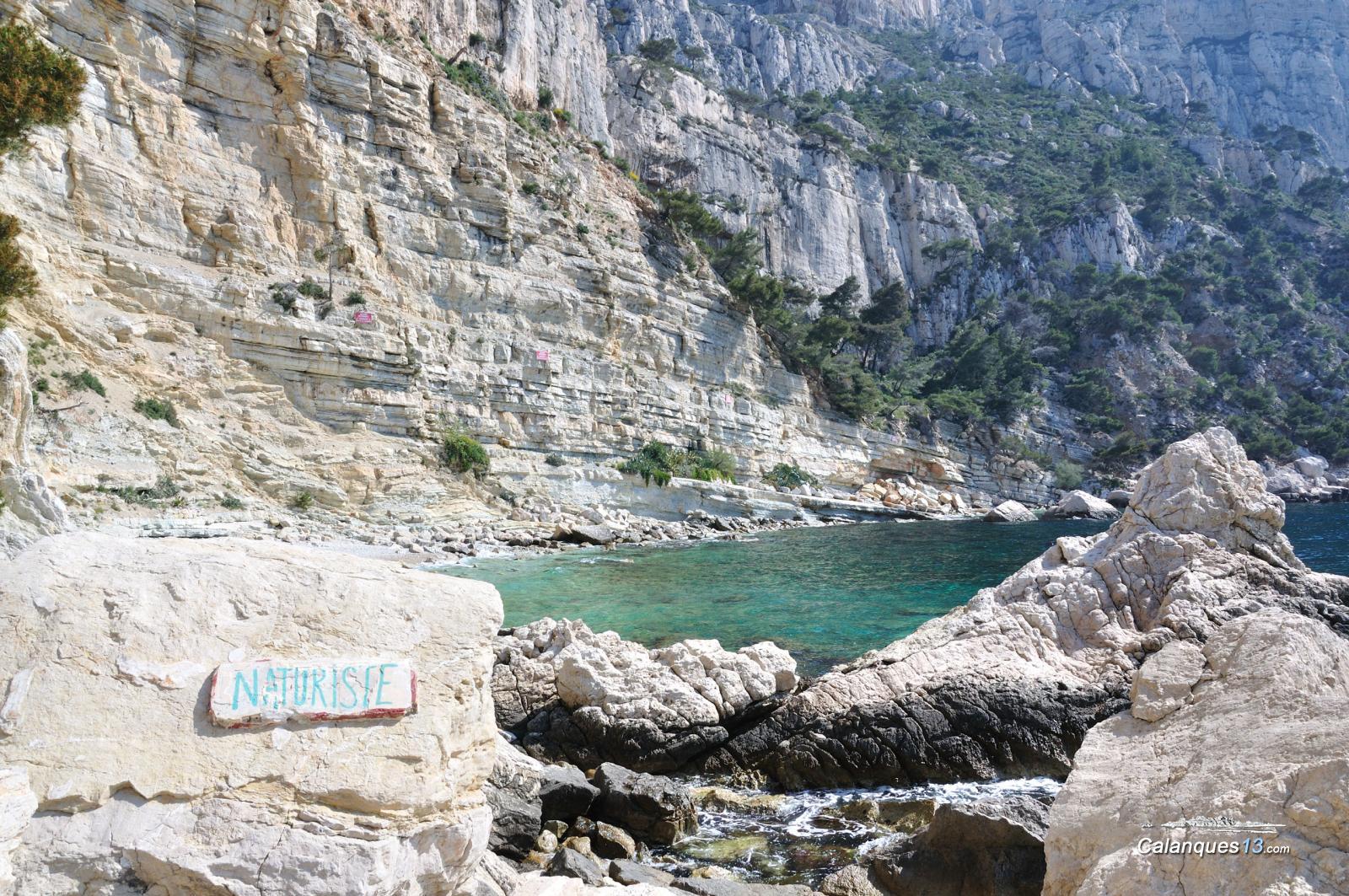
It's a beautiful setting at the foot of high cliffs, with a beach of large stones and, in its second section, a few flat rocks frequented by naturists.In February 2006, a boulder the size of a car broke away from the Pierres Tombées cliff and killed a man on the beach. The calanque was closed by municipal order, then gradually reopened. It is now included within the booking area. Preventive rock-clearing work is carried out there regularly. In October 2025, a rockfall on the trail led to another temporary closure of Sugiton and the Pierres Tombées.
The Falaise des Toits (the Roofs cliff)
The Paroi des Toits is the most famous climbing sector at Sugiton. Around a hundred bolted routes, facing due south, on athletic overhangs and roofs. It's a winter sector par excellence, sheltered from the rain by its overhang.These cliffs are home to an ecosystem of their own. Peregrine falcons nest here every spring (laying from April to June). As a result, part of the sector's climbing routes are closed to protect nesting. The exact dates are published on the Park's website each year.
The European free-tailed bat (Tadarida teniotis) occupies the crevices of the cliff. With a wingspan of 40 to 45 cm, it's one of the largest bats in France. It's also the only one whose calls are audible to the human ear, a steady "tsik tsik," heard on summer evenings if you know what to listen for.
The calanque de Sugiton is also accessible by boat, see the boat tour of the calanques
-

Little beach
-

Islet
-

Le Torpilleur
-

Cliffs of the calanque des Pierres Tombées
-

Calanque des Pierres Tombées
-

View from the ridges
❓ Frequently Asked Questions about Sugiton
Is booking mandatory all year round?
No. The system applies only during the high season: Weekend of June 20-21 - Every day from June 27 to August 30 - Weekends of September 5-6 and September 12-13 (2026 calendar). The rest of the year, access is free. In the event of a red-level fire risk (June 1-September 30), the calanque is closed and bookings are automatically cancelled.
Can you visit Sugiton with children?
Yes, but with caution on the final descent (loose rocks). The Luminy-col section is doable with children who can walk, from around 5-6 years old. The final section down to the calanque requires more care. The viewpoint, however, is accessible to everyone. Children under 3 don't need a booking.
Can you swim at Les Pierres Tombées?
Yes, since the site's gradual reopening. Les Pierres Tombées are included within the booking area. The sector remains subject to temporary closures after rockfalls (the most recent dates back to October 2025), check the site's status before setting off.
Is the Luminy car park free?
Yes, it's free. But it fills up very early in season (before 9am on some days in July-August). The B1 (from Castellane) and 24 (from Sainte-Marguerite-Dromel) buses serve Luminy regularly. Don't leave anything valuable in your vehicle.
Can you reach Sugiton from Morgiou on foot?
Yes, via a coastal trail marked in red (3 to 4 km, rated difficult). The route includes technical passages: a metal ladder, a 10-metre chain, polished rock. The full Luminy-Morgiou-Sugiton-Luminy loop is 7.5 km, 300 m of elevation gain, and about 3 hours of actual walking time.