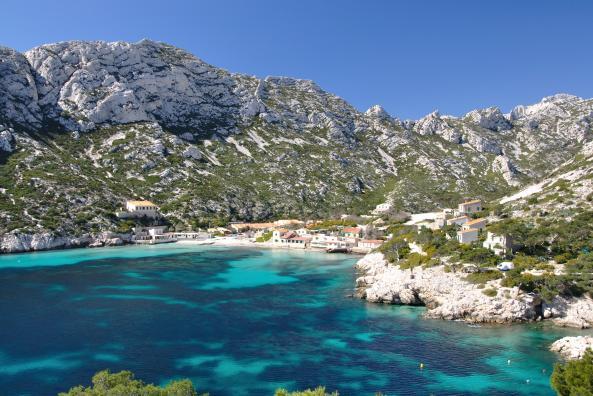
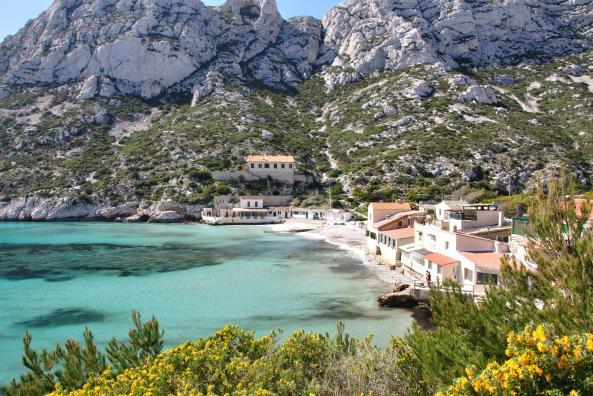
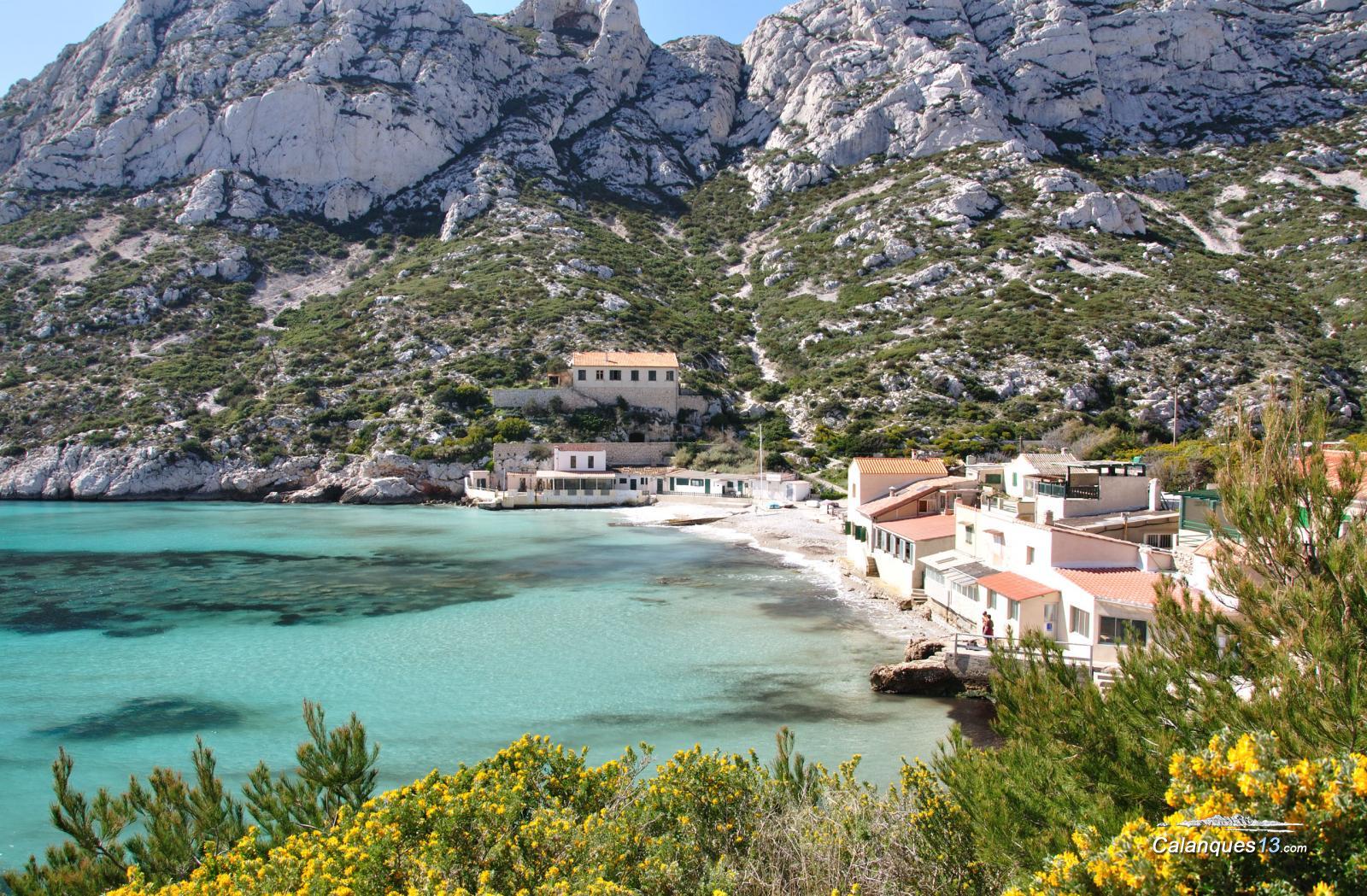
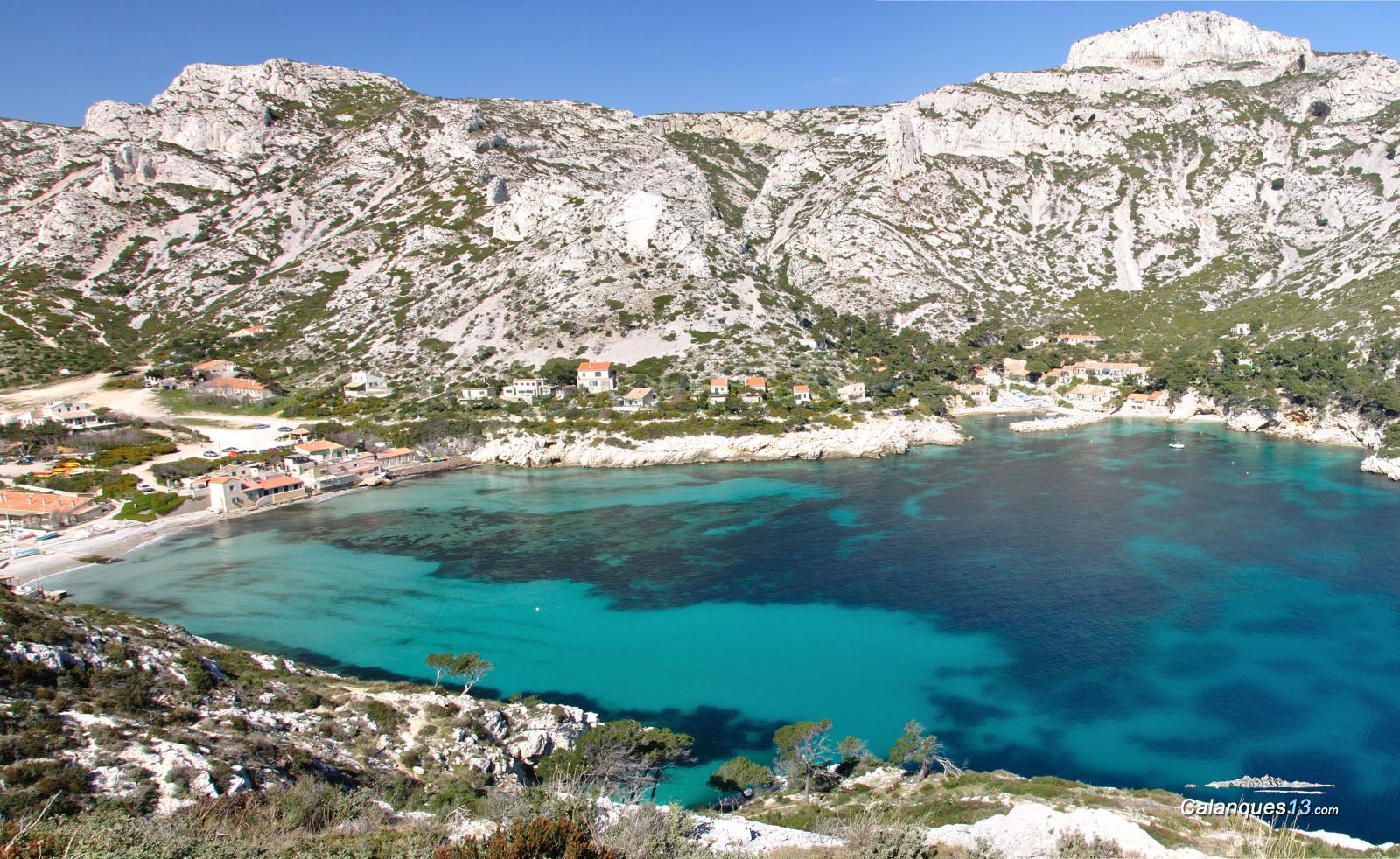
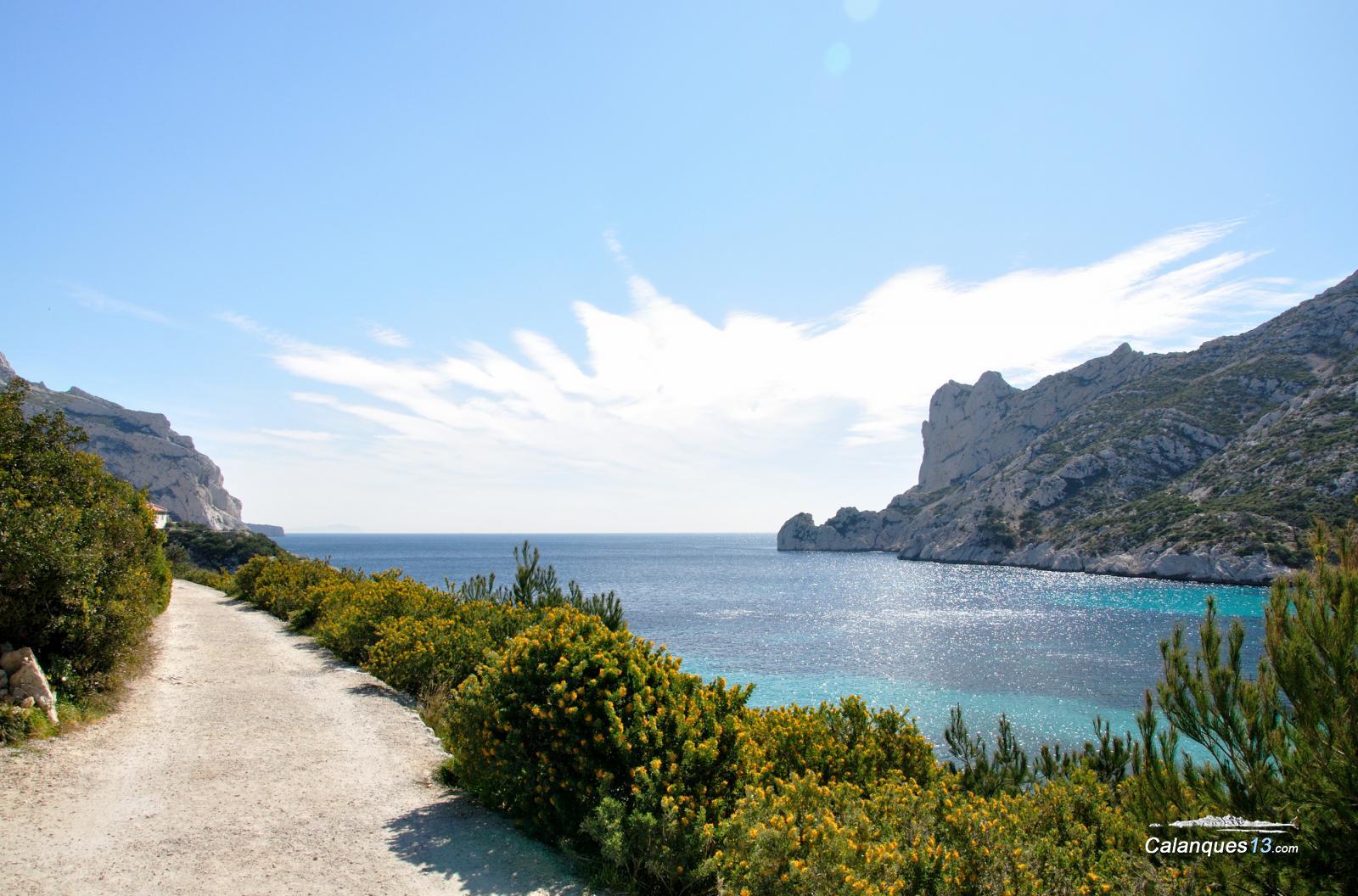
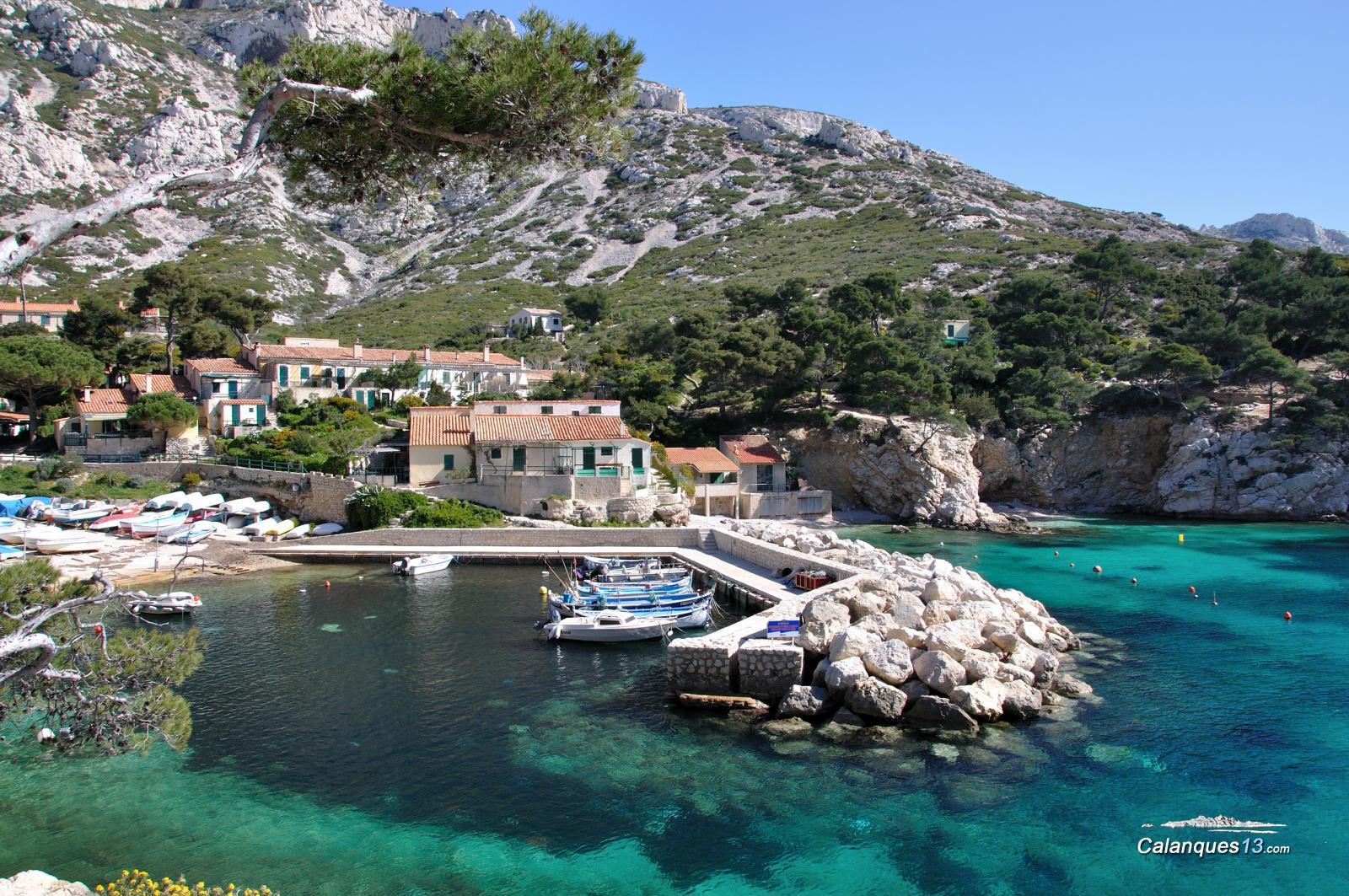
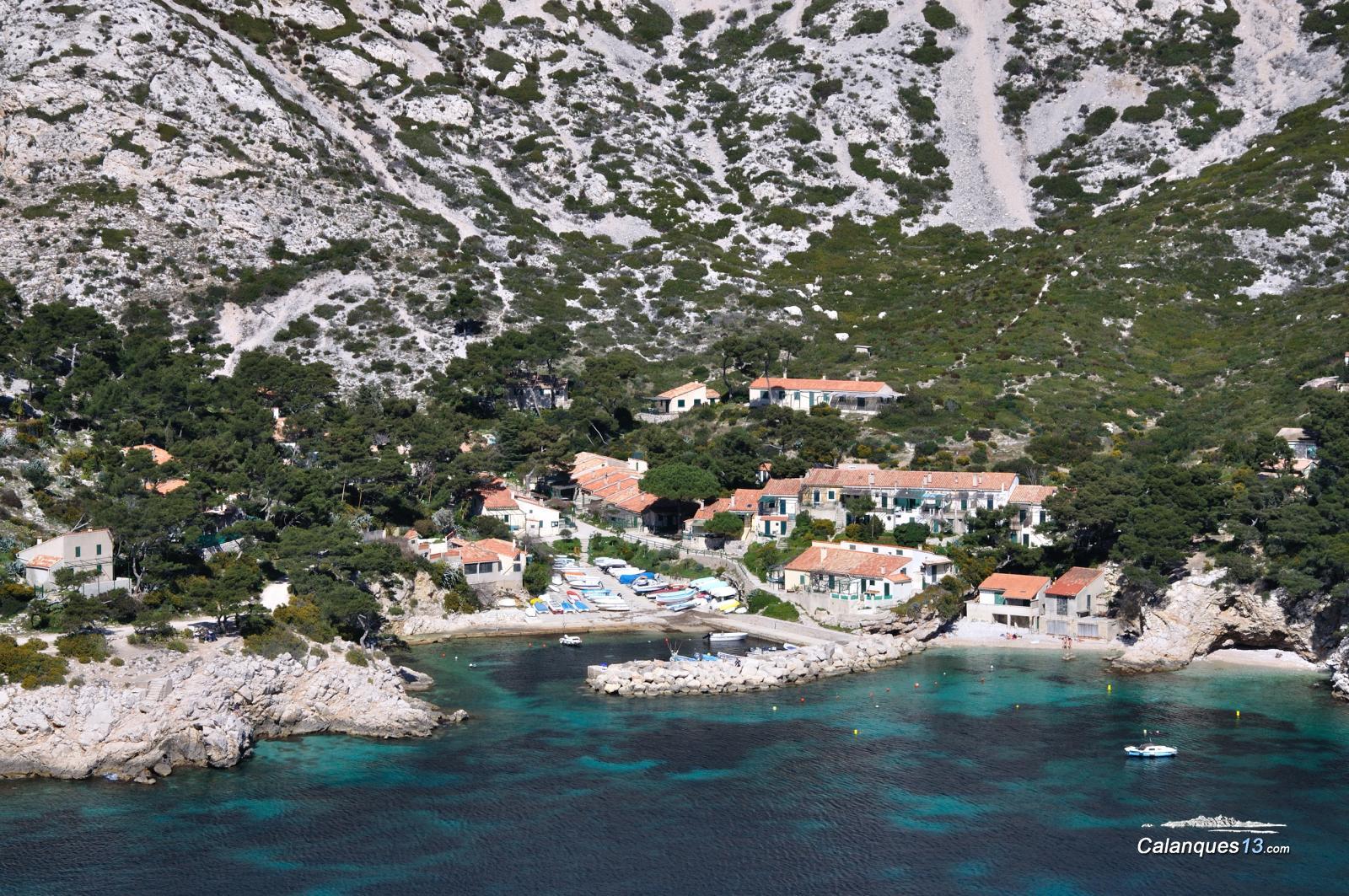
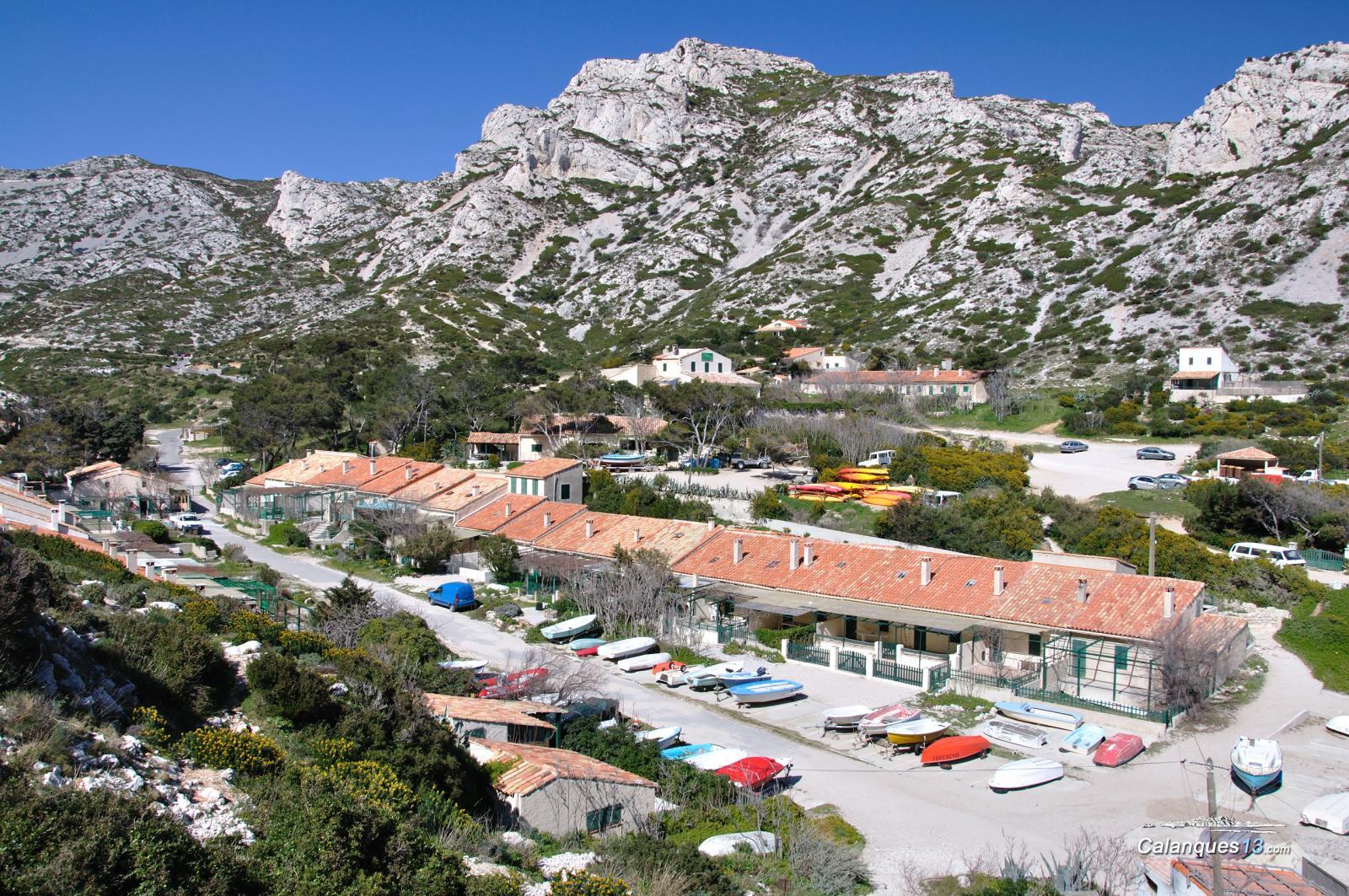
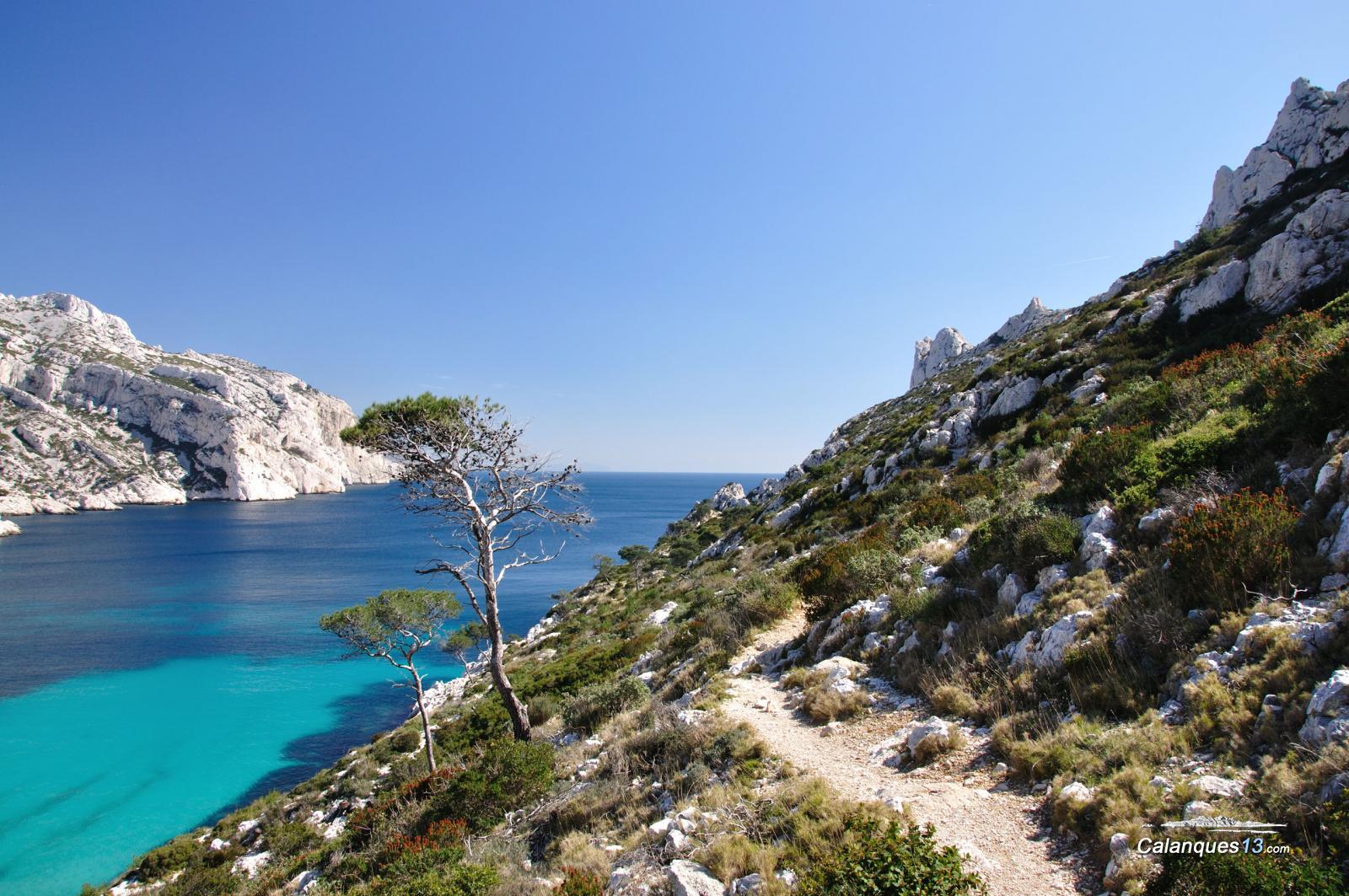
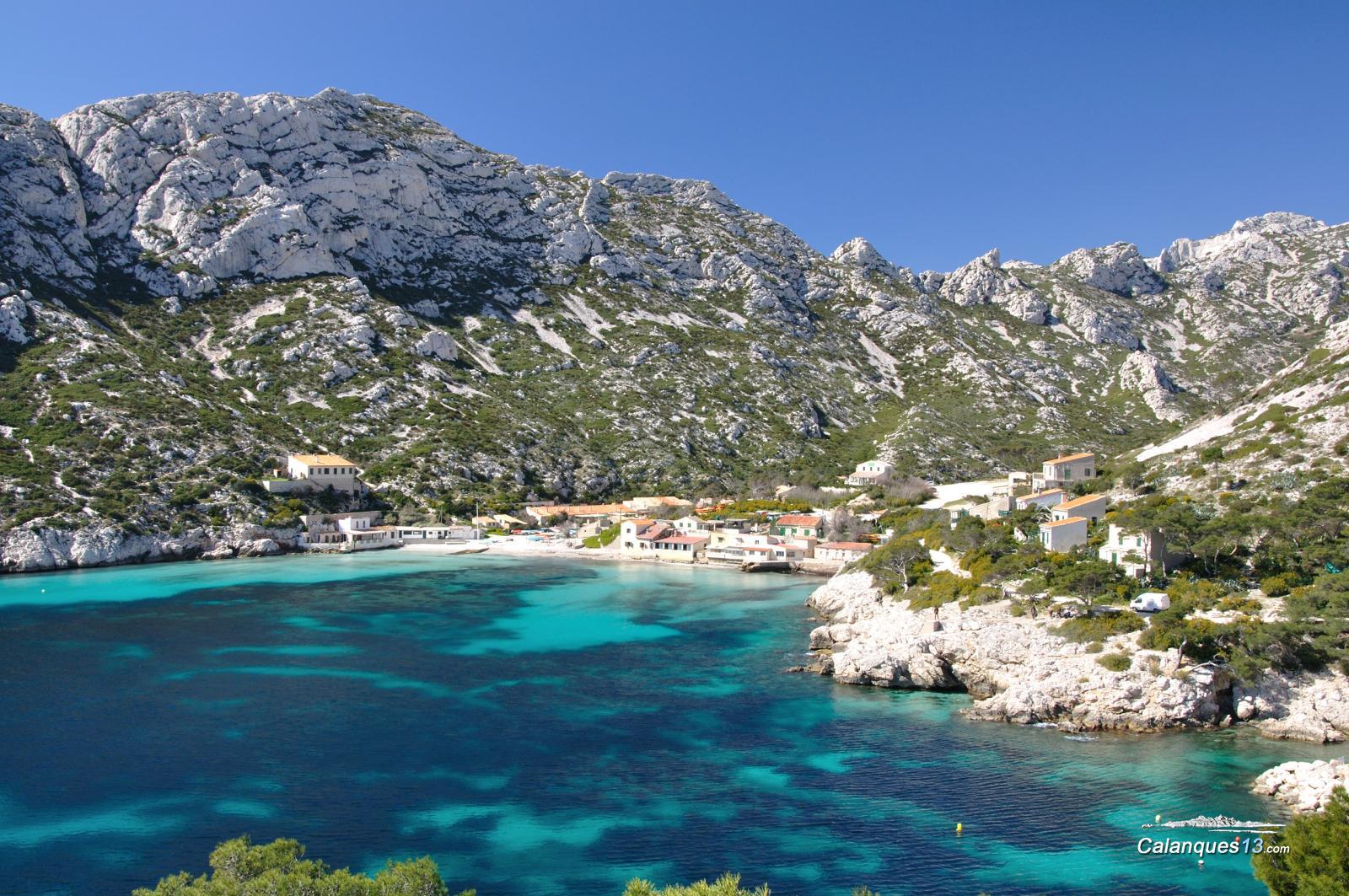
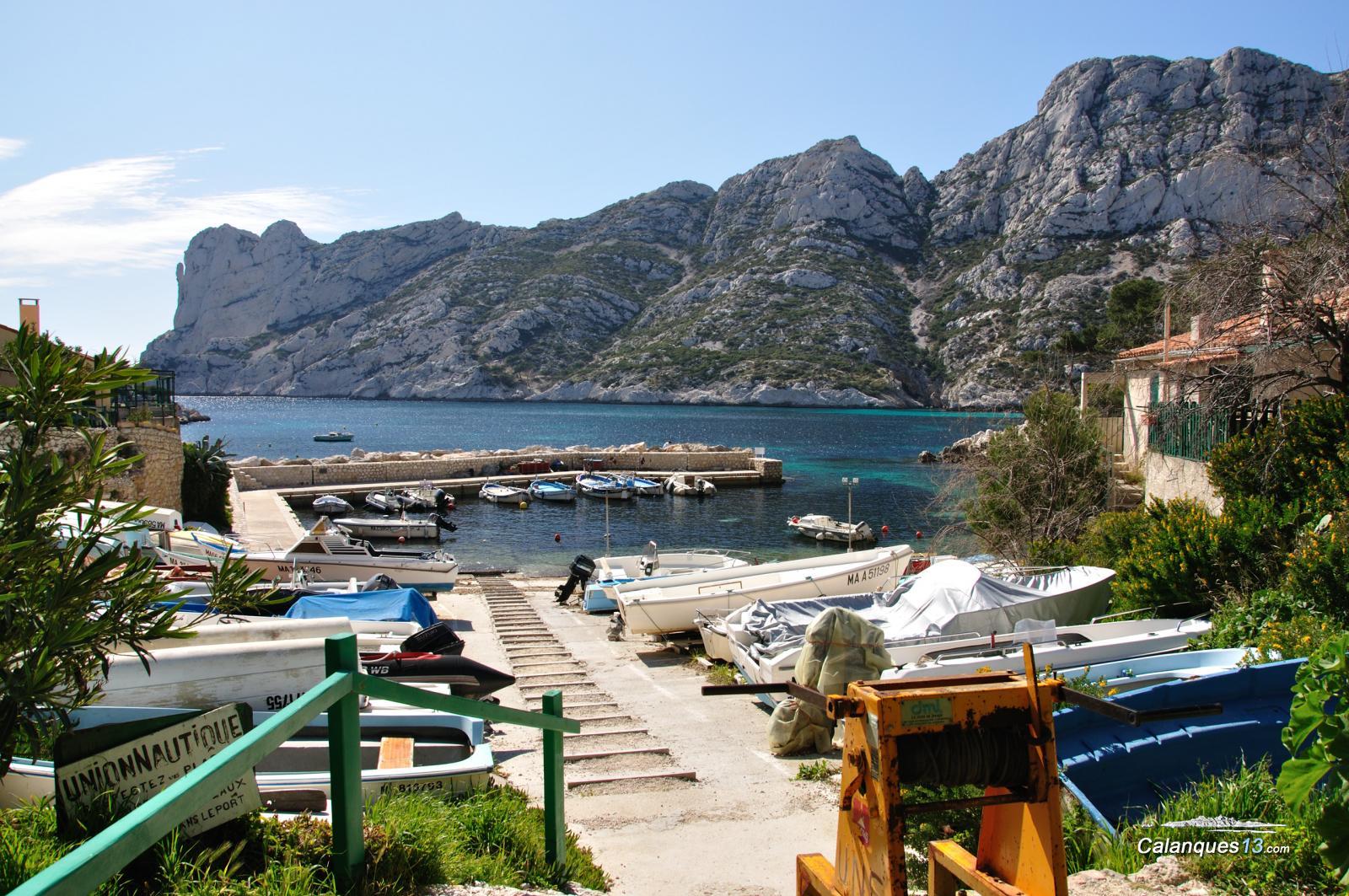
Sormiou is the largest of the Marseille calanques and for many, the most endearing. Not only for its sandy beach, rare in this massif of white rock, but for everything it holds: "cabanons" inherited from several generations of Marseillais, a small fishing port that still smells of iodine and pastis, and underwater, a history that changed the world of diving.
Access to the Calanques is regulated by prefectural decree throughout the summer. Before you go, check if the area is open today (updated daily at 6:00 PM).
Check real-time access status
Sormiou: Access from Les Baumettes or La Cayolle
Via Les Baumettes: Woodland path up to the pass, then a descent on a stony path with rocky sections and occasionally slippery portions
Direct access by car and parking (under certain conditions)
How to get to Sormiou?
Two main paths provide access to the Sormiou calanque via La Cayolle or Les Baumettes, in addition to a variant along the ridges with superb viewpoints, and direct access possible by road under certain conditions.These paths, particularly the one starting from La Cayolle, although technically easy, can be grueling in the summer heat. (Not recommended for toddlers)
The route via la Cayolle (the easiest)
From La Cayolle parking lot (free), the route is straightforward, perhaps too much so (Sormiou via La Cayolle). You first follow a winding paved road up to the pass. Then, once past the pass, the trail descends cutting through the bends, with no shade, fully south-facing. In summer, it quickly becomes an oven. Fortunately the descent offers a sweeping view of the calanque, turquoise water and cabanons. It's worth every bit of effort.The route via les Baumettes (recommended)
This is the route we recommend to those who know the area. From the Baumettes parking lot (free), the trail first winds into the Baumettes park and a shaded pine forest — the scent of resin, the slightly softer ground, the cicadas. You forget you're ten minutes from the city. After the pass, the path runs along the hillside, alternating between limestone slabs and loose stones, before opening onto the calanque. Allow 50 minutes at a relaxed pace (Sormiou via Les Baumettes - recommended route).The route via the Cap Morgiou ridgeline (the panoramic variant)
For those who want to earn their descent. This variant starting from les Baumettes takes 1h15 but offers what the other two don't: a bird's-eye view over Sormiou and Morgiou from the cape ridgeline, with the wind whipping around you and the feeling of having the massif to yourself. A short downclimb section (nothing technical, just be in reasonable shape) before reaching the small coves behind the harbour, well away from the bustle of the beach.Access to Sormiou by road and parking (regulated)
Access to the calanque is possible by car as far as the large (paid) parking lot behind the beach (see when to go to the calanques).The toll collected at the bottom of the calanque is €10 per car for parking. Additionally, parking access is limited to 8:00 AM to 6:00 PM during the off-season (From December 1st to April 1st).
The beach
Sormiou is the exception among the calanques: where most offer only a strip of pebbles, it spreads out a real sandy beach stretching over a hundred metres. A rarity in this massif. The slope is gentle, the water deepens gradually. It is one of the only calanques where you can let children wade in without watching their every step.In summer, it is also the only calanque with a supervised swimming area staffed by lifeguards, with a CRS team present on the beach. A luxury found nowhere else in the calanques.
Once the towels are laid down, the calanque opens in two directions. To the right, a path climbs above two small coves towards cap Sormiou, then cap Redon, and the Capelan cave is not far beyond. To the left, a lane lined with colourful cabins leads to the small harbour, before the path rises above two pebble beaches and begins the climb towards the Morgiou ridge.
-

A piece of paradise
-

Sand Beach
-
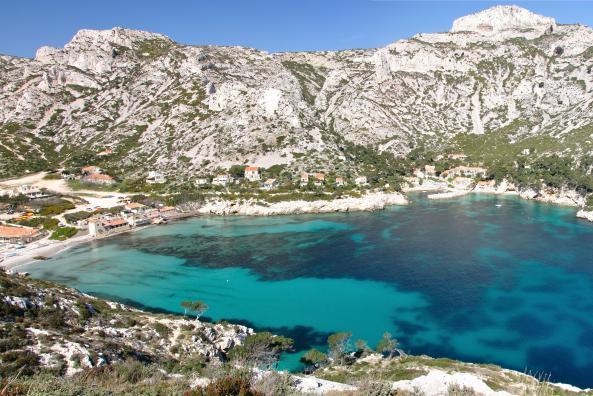
Overview of the Calanque
-
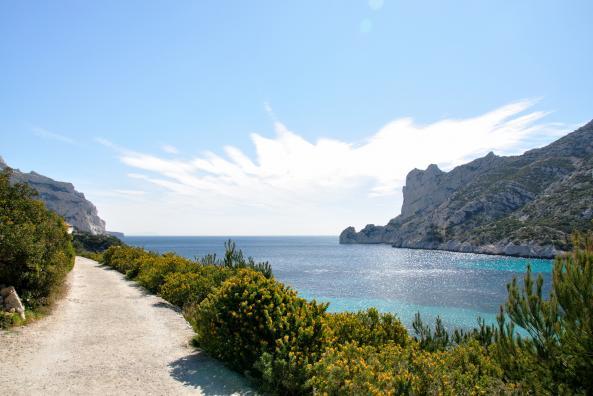
Path between the beach and the port
-
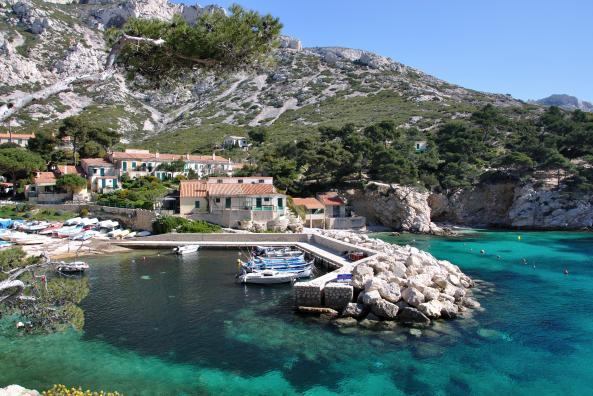
Port of Sormiou entrance
The Cosquer Cave: A treasure beneath the sea
On July 9, 1991, diver Henri Cosquer ventured into a submerged tunnel 37 meters deep, located at the exit of the Sormiou calanque.After a 175-meter crossing in total darkness, he emerged into a vast chamber that had remained dry. There, on the walls, a hand drawn in ochre stared back at him across the millennia.
This sanctuary houses a bestiary unique in the world with over 500 works created over two major periods (between -33,000 and -19,000 years ago).
The hands of our ancestors: 65 prints, including some from children's hands.
A prehistoric zoo: Horses, bison, but above all rarities such as seals and great auks.
These drawings of marine animals are exceptional and remind us that at the time, the shoreline was much further away and that these artists lived facing a sea they already observed with admiration.
The Cosquer prehistoric cave has been classified as a Historic Monument since September 1992; its access is forbidden to the public, protected by a stainless steel gate and a prefectural decree prohibiting any diving within a 500-meter radius. Its replica, Cosquer Méditerranée, can be visited at the Villa Méditerranée (J4 esplanade).
Sormiou, the cradle of scuba diving
There is an irony in the fact that Paleolithic men frequented these seaside cliffs, and that, 20,000 years later, other men chose this same place to invent the way to return underwater. It all started from a "cabanon" (small cabin), that of Georges Beuchat. In 1934, he founded the world's first diving equipment brand. In the clear waters of the calanque, he passed on his passion to a local kid: Albert Falco.Falco would become the captain of the Calypso, Cousteau's lifelong companion, and the first "oceanaut" in history (1962). His autobiography is simply titled Sormiou, the blue cradle of my memories. It was here that they tested the first prototype of an isothermal neoprene wetsuit in history, revolutionizing world diving. A beautiful tribute: Albert Falco passed away in 2012, just as the Calanques National Park was being established. The protected area of Sormiou now bears his name, watching over the seabed he loved so much.
Behind the postcard
During the fine weather, walking an hour to Sormiou is not necessarily a guarantee of peace and quiet. Indeed, although access to the road leading to the calanque is closed during the day by a guarded barrier as part of fire prevention measures, it is not uncommon to see a stream of cars heading down to Sormiou in the middle of the day. In addition to cabin owners with a permit, restaurant patrons and residents of the nearby Cayolle neighborhood are allowed to use this road.- You can also get to the Calanque de Sormiou by boat. More info here
❓ Frequently Asked Questions about Sormiou
How to get to the Sormiou calanque by public transport?
From the Rond-Point du Prado metro station, take RTM bus no. 22 to the « Les Baumettes » terminus, then follow the red-marked trail (50 min). You can also take bus no. 23 to the « La Cayolle » stop (1h walk).
Can you drive down to Sormiou and park?
Access to the Sormiou road is regulated. During the summer season and busy weekends, the barrier is closed to motorized vehicles. Only 'cabanon' residents and restaurant customers with a reservation (and license plate provided) are allowed to drive down. The rest of the year, the road is open but very narrow. Parking at the bottom of the Sormiou calanque is also subject to limited hours from 8:00 AM to 6:00 PM during the off-season (December 1st to April 1st).
Where to park to go to Sormiou on foot?
The most obvious starting point is the (free) parking lot located at the entrance to the La Cayolle neighborhood. Another departure point is possible from the Baumettes district, offering a more natural and equally spectacular trail.
Is the beach suitable for children?
Yes, Sormiou is one of the few calanques to have a wide sandy beach and a swimming area supervised by lifeguards in July and August. It is undoubtedly the most 'family-friendly' calanque in the massif.
Do you need a reservation to access the Sormiou calanque?
Unlike the Sugiton calanque, access to Sormiou on foot does not require a reservation (quota), regardless of the time of year. However, access remains free provided the massif is not closed due to fire risk.